Holi is the festival of colour — but it’s so much more than that.
It’s the moment the air turns soft and sweet again after winter. It’s the celebration of lightness, of letting go, of starting fresh.
In India, Holi marks the arrival of spring, and with it comes a joyful chaos that spills into the streets, the homes, the heart. It begins quietly, the night before, with Holika Dahan — a fire is lit to symbolise the burning of old shadows, the triumph of good over evil. But the real magic begins the next morning.
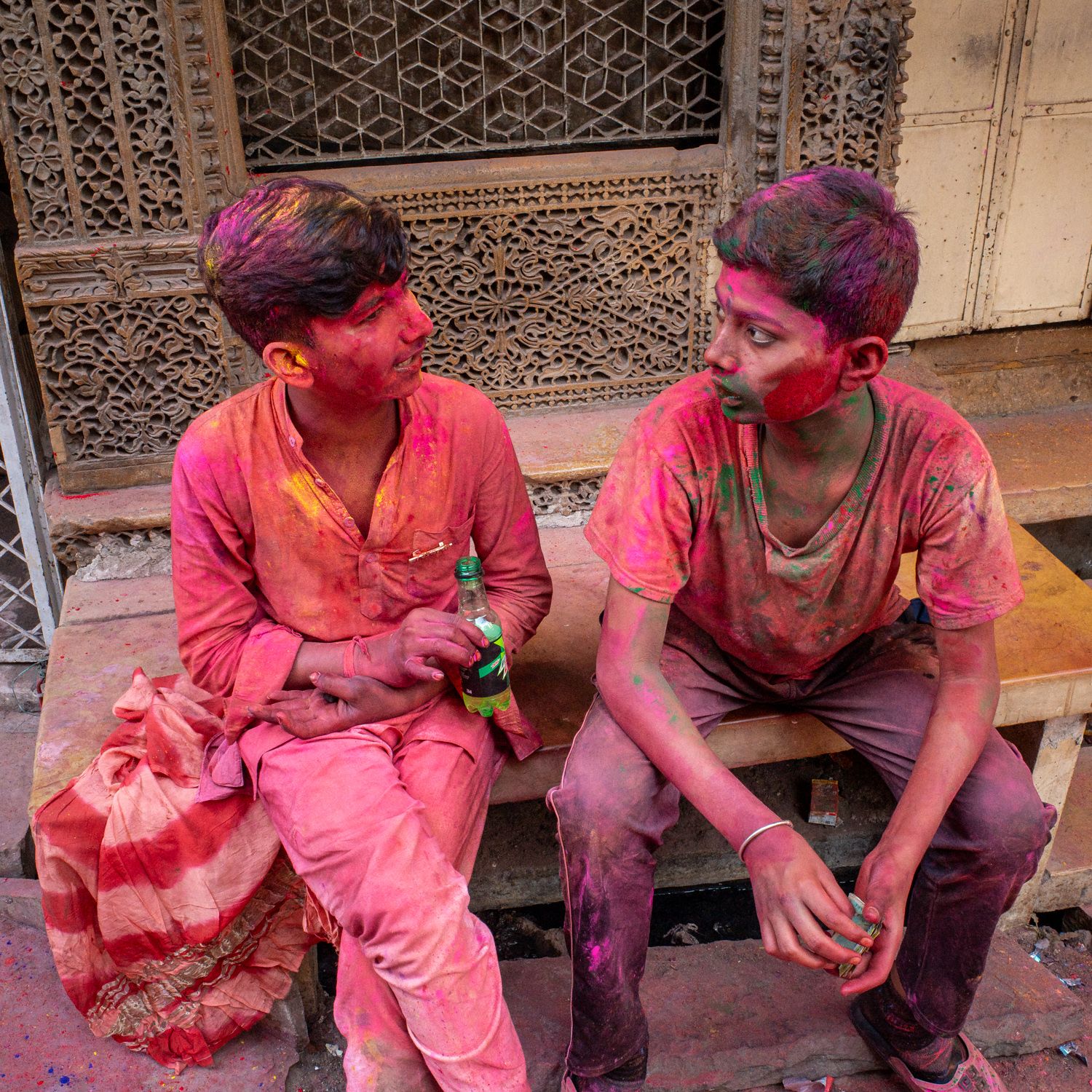
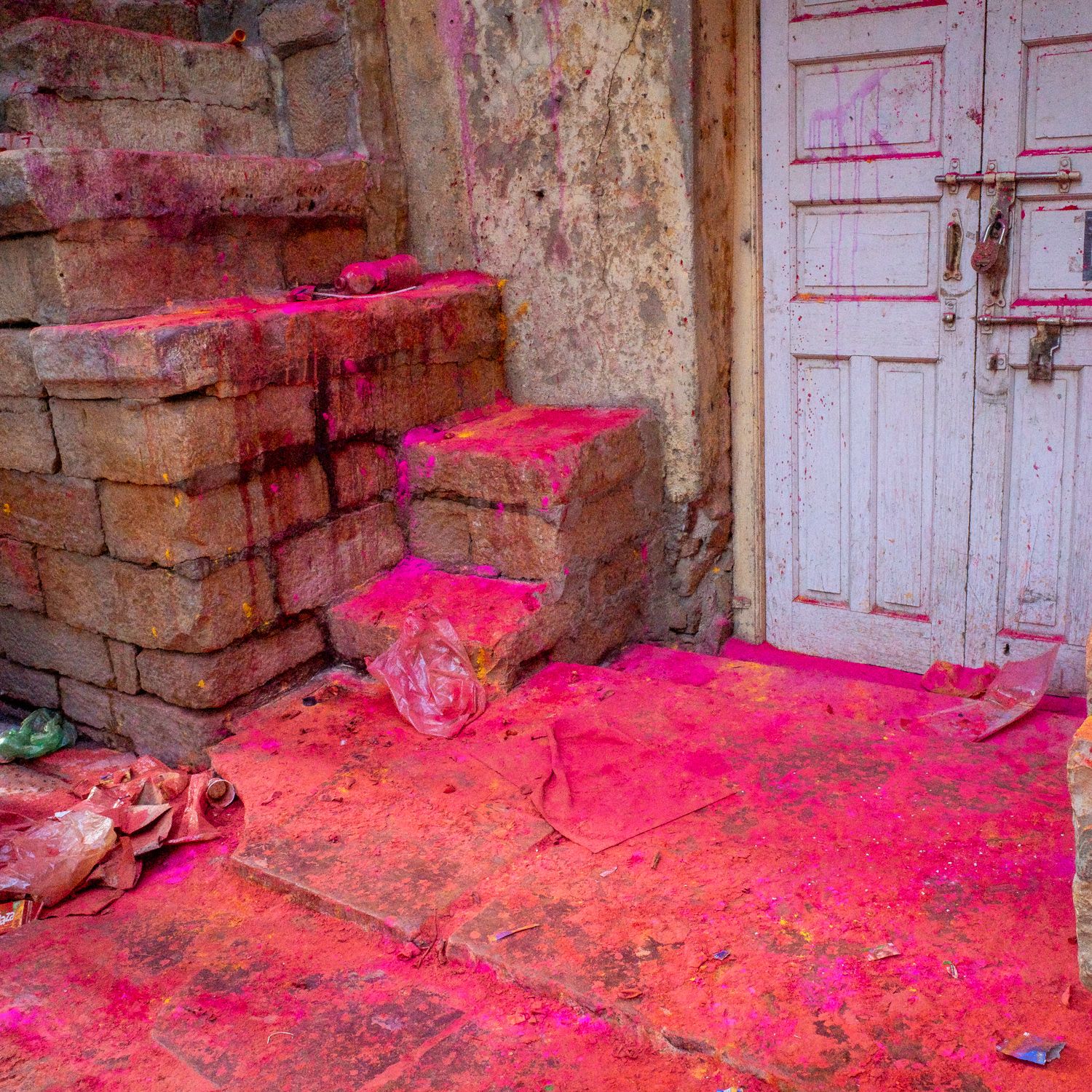
At sunrise, the world starts to change. White clothes are worn a lot of the time, but not always — not to stay clean, but to become a canvas. And then: powders fly, laughter rises, music swells. People paint each other’s faces with gulal — vibrant powders in pink, green, orange, blue.
Friends chase each other with coloured water. Strangers become companions in a moment. Shyness disappears. Joy takes over.
It’s messy. It’s wild. It’s beautiful.
But Holi is also soft. Between the bursts of colour and the playful splashes, Holi is a quiet ritual of renewal. It says:
Let’s begin again.
Let’s forgive what can be forgiven.
Let’s laugh a little louder today.
Let’s remember that life is meant to be lived in full colour.
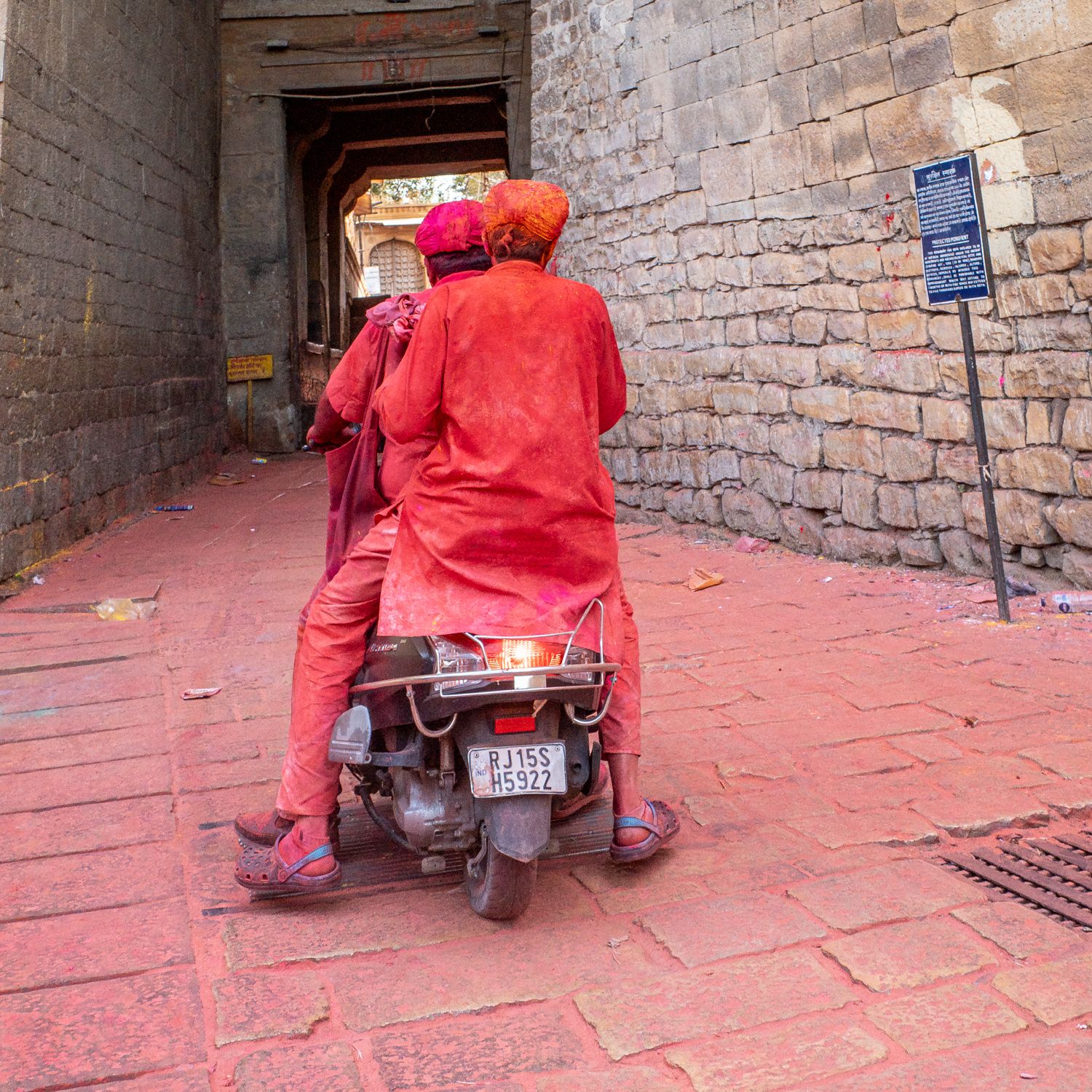
And in places like Jaisalmer, Holi is woven into the rhythm of the desert. Under sandstone walls and open skies, it feels both ancient and alive — a dance between dust and brightness, between stillness and celebration.
We were lucky to witness it — to be covered in colour, to be invited into the joy, to carry a little of that spirit home with us. Holi reminded us: Beauty is not always tidy. Joy is not always quiet. Life is not meant to stay clean.
Some things are meant to be splashed, stained, and remembered.
With colourful love,
Desertpeople